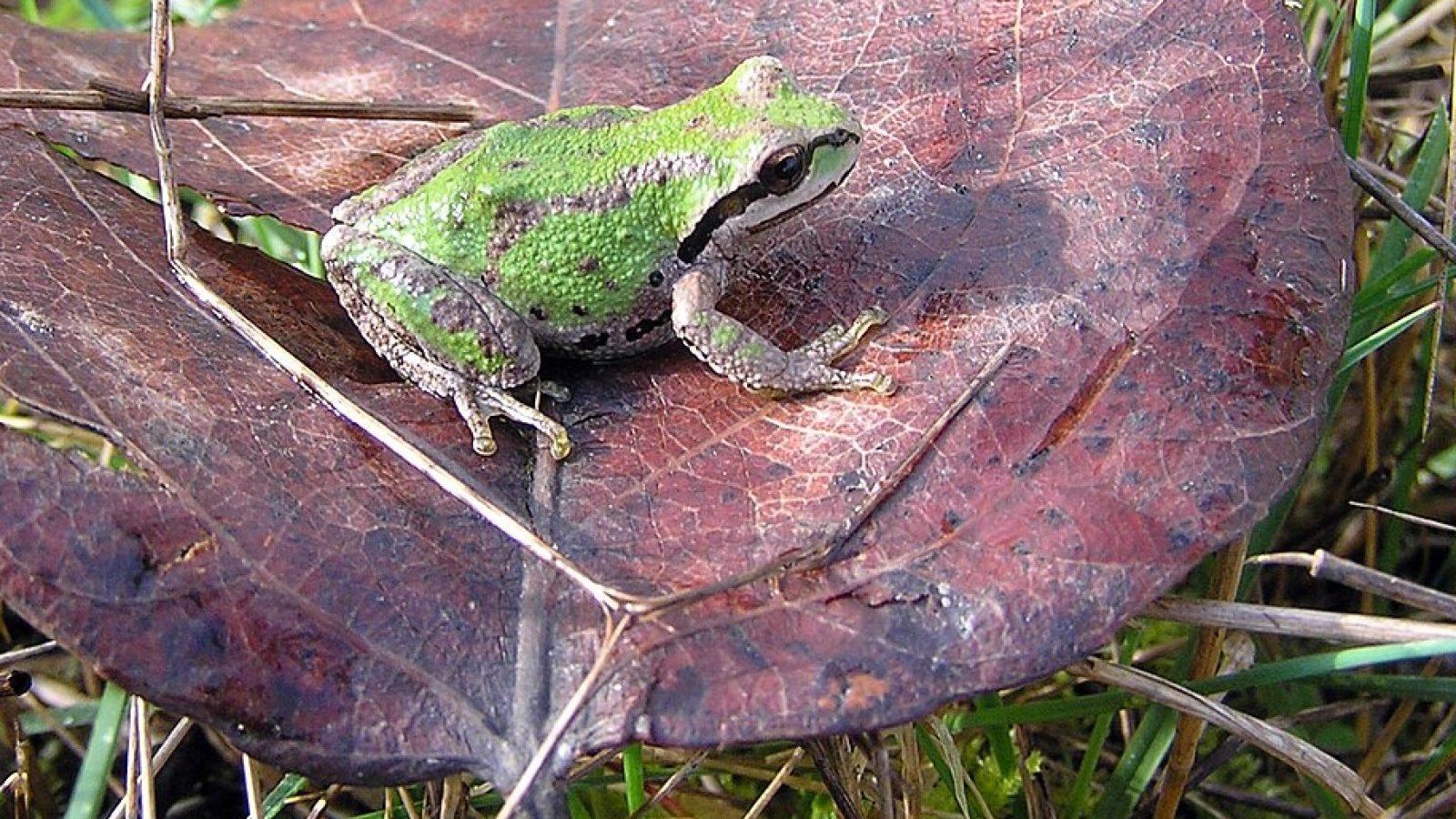
Every spring, a rotating group of about a dozen volunteers sets an alarm for 4:15am, drives out to one of six monitoring points across our preserves, and stands quietly in the dark listening for frogs. This is our citizen science amphibian monitoring program, and the unglamorous 5am timing is not incidental — it’s when Pacific tree frogs and California red-legged frogs are most reliably calling, before the day warms and traffic noise on nearby roads makes call identification unreliable.
The protocol is simple to describe and genuinely demanding to do well: five minutes of silent listening at each point, logging every species heard and a rough abundance estimate, repeated at the same points on the same nights across the season so the data is comparable year over year. Volunteers go through a single training session with our stewardship staff — mostly learning to distinguish call types by ear, since Pacific tree frog and California red-legged frog calls are the two species our monitoring focuses on most closely — and then commit to at least four survey mornings across the March-to-June season.
This year’s volunteer, Priya Chandra, has done the Two Forks monitoring point for three consecutive seasons. “The first year I genuinely couldn’t tell the species apart,” she told us. “By the third morning of my second season it clicked, and now I can pick out a red-legged frog call from across the pond even with three other things calling at once.” That kind of accumulated skill is exactly why we prefer volunteers who return season after season — new volunteers are always welcome, but the data gets more reliable as the same trained ears keep returning to the same points.
This year’s counts logged California red-legged frog — a federally threatened species — at four of our six monitoring points, up from three points last year. Whether that’s a real population increase or a good-weather season we won’t know until we have a few more years of consistent data, which is exactly the kind of patient, repeatable work volunteer citizen science is suited for and staff time alone could never cover at this frequency.